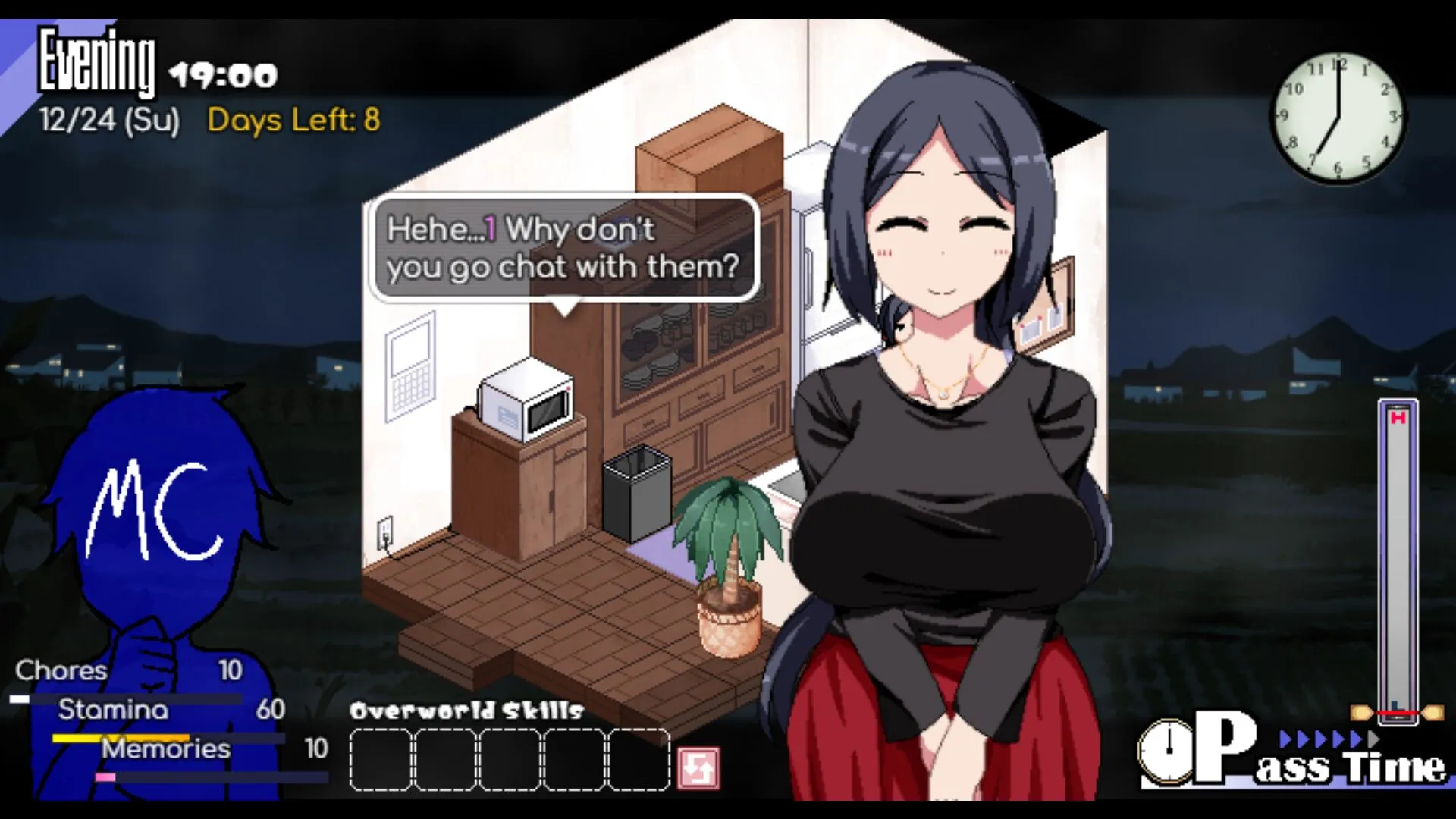
By Justice or Mercy
Play By Justice or Mercy
By Justice or Mercy Screenshots
















By Justice or Mercy review
Explore the interactive storytelling experience that challenges player decisions
By Justice or Mercy stands out as a unique interactive narrative experience that blends deep storytelling with meaningful player choice. This game challenges conventional gaming by placing your decisions at the center of the experience, forcing you to navigate complex moral dilemmas and character relationships. Whether you’re a fan of choice-driven narratives or interactive fiction, understanding what makes this game distinctive can help you appreciate its approach to player agency and consequence-driven gameplay. In this guide, we’ll explore the core elements that define By Justice or Mercy and what sets it apart in the interactive gaming landscape.
Understanding By Justice or Mercy: Core Gameplay & Narrative Structure
Ever found yourself screaming at a movie character, “Don’t go in there!” or pleading with a book’s protagonist to make a better choice? 🎬 We’ve all been there. Traditional stories are a one-way street, but what if you could grab the wheel? That’s the electrifying promise of By Justice or Mercy, an interactive storytelling experience that doesn’t just tell you a tale—it asks you to live it, shape it, and bear the weight of every single decision.
This isn’t just another game you play; it’s a world you inhabit. From the moment you step into its rich, narrative-driven world, you understand that your voice is the most powerful tool you have. This By Justice or Mercy interactive game is built from the ground up to prioritize the journey of your conscience, making every click, every selected dialogue option, a step on a path that is uniquely yours.
What Makes This Interactive Game Unique 🕹️
So, what separates By Justice or Mercy from the crowd of other narrative titles? It’s the absolute, unshakable commitment to player agency. Many games offer the illusion of choice—a fork in the road that conveniently merges back into the same highway a mile later. This game tears up that highway and builds a sprawling, organic web of country roads, dead ends, and breathtaking vistas you might completely miss on another playthrough.
The core identity of this narrative-driven interactive fiction is its refusal to hold your hand morally. There is no glowing “good” option or snarling “evil” path. Instead, you are presented with authentically messy situations where the “right” answer is a matter of perspective, personal history, and the specific values of the character you’re becoming. The game’s genius lies in its moral dilemma game mechanics, which are seamlessly woven into every interaction, from major plot turns to casual conversations.
Let me give you a personal insight. In my first playthrough, I encountered a minor character who had stolen medicine. My initial, justice-oriented instinct was to turn them in—rules are rules, right? But a stray dialogue option let me learn why: they were desperately trying to save a sick child the system had abandoned. In that moment, the clean binary of “crime and punishment” dissolved into a murky gray sea of compassion, societal failure, and immediate need. The game didn’t judge me for either choice; it simply showed me the consequences.
Here are the key features that define this unique experience:
- A Living World That Reacts: NPCs remember your actions, their attitudes shifting based on your reputation. Help a faction, and their rivals will treat you with cold suspicion.
- No “Paragon” or “Renegade” Meter: Your morality isn’t quantified. The game tracks your specific decisions, creating a nuanced profile that influences which story branches become available to you.
- The Butterfly Effect is Real: Seemingly insignificant early choices can unlock or lock away entire character arcs, locations, and solutions to late-game problems.
- Emotional Stakes Over Mechanical Rewards: Choices are rarely about getting a better gun or more coins. They are about saving a life, breaking a heart, forging an alliance, or sowing the seeds of a future betrayal.
- Respect for Your Time: The branching storyline game structure is designed for multiple playthroughs, with robust save systems and chapter select features that let you explore key decision points without starting from zero.
| Traditional Choice Game | By Justice or Mercy Interactive Game |
|---|---|
| Choices often lead to the same major plot points. | Choices create radically different narrative endpoints and journeys. |
| Morality is often a simple slider (Good/Evil). | Morality is a complex web of relationships, principles, and context-dependent decisions. |
| Consequences are usually immediate and clear. | Consequences can be delayed, hidden, or unintended, emerging hours later. |
| Replay value comes from finding minor variations. | Replay value comes from experiencing entirely new story arcs and perspectives. |
How Player Choices Shape Your Story ✨
This is where the magic happens. In By Justice or Mercy, you are not navigating a story—you are authoring it in real-time. The choice-driven narrative gameplay means that every single decision, from monumental ethical judgments to how you choose to comfort a friend, sends ripples through the narrative pond. These ripples intersect, amplify, or cancel each other out, creating a story flow that feels astonishingly organic and personal.
The game’s architecture is a masterpiece of narrative engineering. Think of it not as a “choose-your-own-adventure” book with a few endings, but as a dynamic ecosystem of cause and effect. The story branches not just at obvious climaxes, but in quiet moments of introspection. A single, offhand comment you make in Chapter 1 might become the reason a character trusts you—or betrays you—in Chapter 5. This deep system of player choice consequences ensures that your story feels truly yours.
Let’s look at a concrete example. Imagine you are the arbiter in a dispute between two farmers, Aris and Kaelen. Aris’s livestock have repeatedly broken into Kaelen’s crops, ruining them.
- Choice A (Justice): You rule strictly by the law. Aris must fully compensate Kaelen for the lost crops, a financial blow that will cripple Aris’s family. Kaelen is satisfied, but Aris is now destitute and resentful.
- Choice B (Mercy): You seek a restorative solution. You mandate that Aris’s family must help Kaelen repair his fence and replant, fostering cooperation. Finances are spared, but Kaelen feels the law was too lenient.
- Choice C (Investigate): You dig deeper and discover Kaelen’s fence was poorly maintained on purpose to provoke a conflict over land rights. This third path, possibly unlocked by a prior choice to be curious or by building a reputation as a thorough investigator, completely changes the moral landscape.
Now, here’s where it gets brilliant. Months later in the game, during a food shortage:
* If you chose Justice, a desperate and bitter Aris might be leading a protest or has abandoned the land, reducing the community’s food production.
* If you chose Mercy, Aris and Kaelen might be working together on a shared farm, making that region more resilient.
* If you chose Investigate, Kaelen might be in jail, and Aris, grateful for your fairness, could become a crucial ally who donates food.
This is the essence of the interactive storytelling experience. The game doesn’t just remember what you did; it understands the nature of your decision and allows the world to evolve from it. Your role is not to guess what the “game” wants, but to decide what you want this world to become, one loaded choice at a time. 🧭
The Balance Between Justice and Mercy in Gameplay ⚖️
The central theme isn’t just in the title for show—it’s the core tension of every significant moment in this By Justice or Mercy interactive game. The game brilliantly frames these concepts not as abstract ideals, but as practical, often painful, philosophies of leadership and human connection. Justice represents order, fairness, precedent, and the greater good. Mercy represents compassion, forgiveness, second chances, and understanding context. Your journey is a constant calibration between these two poles.
This balance is the engine of the moral dilemma game mechanics. You’re never simply asked, “Do you want to be nice or mean?” Instead, you’re placed in scenarios where both justice and mercy have compelling, yet costly, arguments.
Personal Tip: Don’t try to “game” the system by sticking rigidly to one philosophy. I tried a pure “Justice” run, believing it would bring stability. Instead, I created a fearful, compliant society where no one took risks or trusted each other. The most rewarding path was to listen to each situation individually.
The conflict manifests in three key areas of gameplay:
- Character Judgments: As a figure of authority, you will pass judgment on crimes. Is the eager young guard who broke protocol to save civilians a hero to be praised or a liability to be disciplined to maintain chain of command? Your decision will directly shape the culture of your organization.
- Interpersonal Relationships: Your companions have their own past transgressions and secrets. Do you hold them accountable for their lies (Justice), even if it fractures the team? Or do you offer forgiveness to maintain unity (Mercy), even if it sets a precedent that some rules don’t matter?
- Strategic Resource Management: On a larger scale, mercy might mean diverting scarce resources to help a suffering, unproductive village. Justice might dictate that those resources go to the town that pays its taxes and contributes more to the realm’s defense. Both choices have valid strategic and human outcomes.
The game’s profound respect for player choice consequences means it never punishes you for committing to a philosophy. It simply shows you the world that philosophy builds. A justice-heavy path might lead to a stable but cold and unforgiving society. A mercy-heavy path might foster love and loyalty, but also chaos and exploitation from those who see your compassion as weakness.
This is what makes the By Justice or Mercy experience so endlessly replayable. You can play as the unwavering Iron Judge, the Compassionate Redeemer, or—most challenging of all—the Pragmatic Leader who tries to balance both, knowing that every compromise will please some and anger others. Each approach unveils different facets of the story, different character resolutions, and ultimately, a different thematic conclusion about what it truly means to lead, to judge, and to be human.
Your decisions are the ink, and the branching storyline game provides the parchment. There is no “perfect” ending, only the ending you earn through a thousand careful, thoughtful, and heartfelt choices. This is the pinnacle of choice-driven narrative gameplay—a story that doesn’t just belong to its writers, but one that is irrevocably, powerfully, yours. 🔗
By Justice or Mercy represents a compelling approach to interactive gaming that prioritizes narrative depth and meaningful player choice. The game’s strength lies in its commitment to consequence-driven storytelling, where your decisions genuinely shape the direction of the narrative and character relationships. Whether you’re drawn to moral complexity, branching storylines, or the satisfaction of seeing your choices matter, this interactive experience offers a refreshing alternative to traditional gaming. If you’re interested in games that challenge you to think critically about your decisions and their ripple effects, By Justice or Mercy deserves your attention. Start your journey today and discover how your choices define the story.